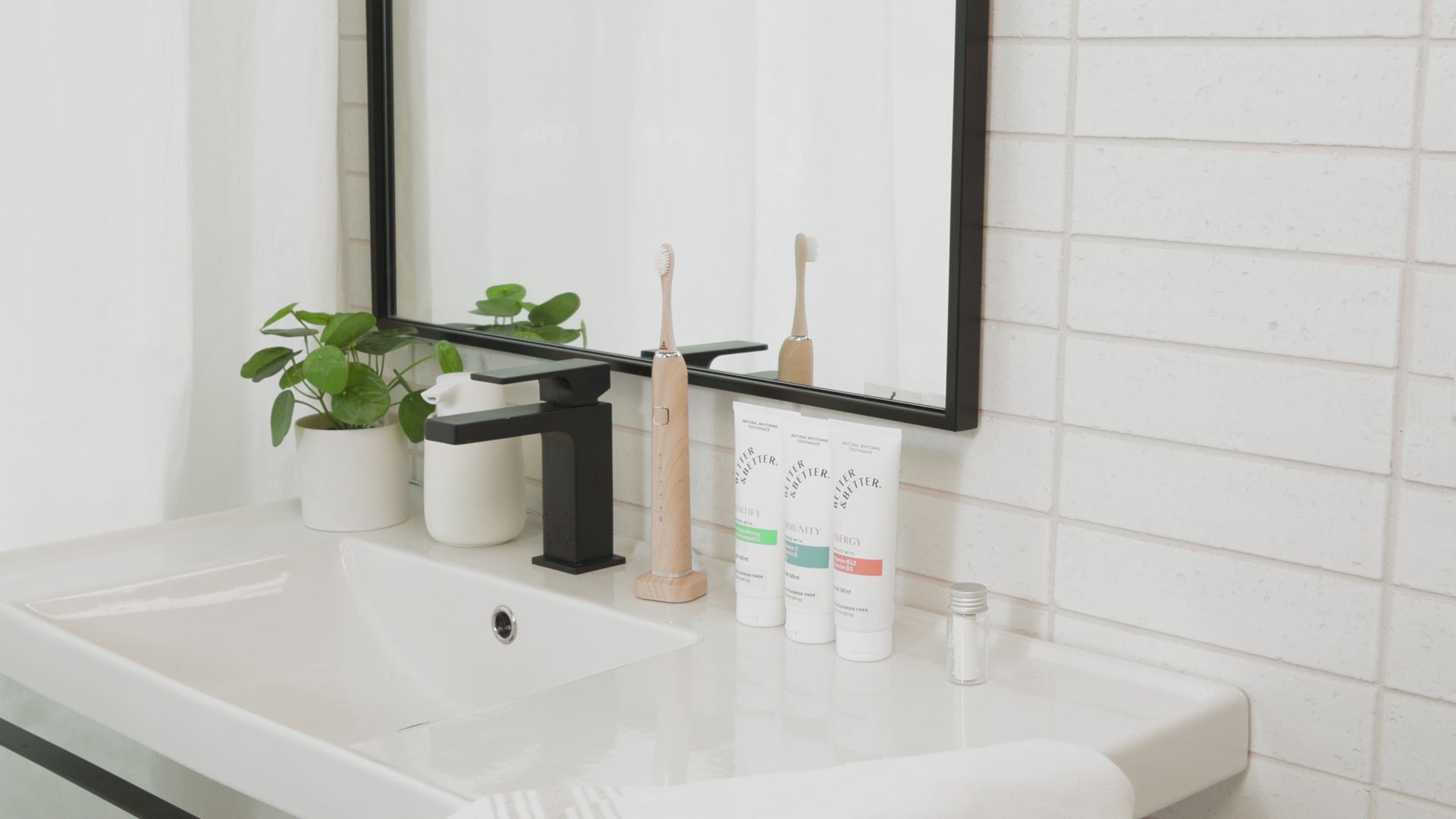
FEEL BETTER, FOREVER
Our co-founder, Vladimir Vukicevic, shares the personal journey that led him to launch Better & Better with a big ambition.
OUR FOUNDING TEAM

Vladimir VukicevicCo-founder & CEO
"Long before clean and organic products were accessible, I recognized the need for products that are better for our health. With Better & Better, I set out to create products that make it easy to improve your habits and health."

Mary CostaCo-founder & Marketing Advisor
"Ditching traditional oral care decades ago transformed my oral health-I love that Better & Better is taking it to the next level by optimizing foundational habits with a focus on whole-body health and earth-friendly choices."

Jerry HuCo-founder & COO
"With years of experience in consumer goods and food & beverage supply chain, l'm passionate about creating high-quality products for our health, while being responsible to the planet.
Step-by-step, we're making the best choices today, and better tomorrow."
OUR PURPOSE, OUR PROMISE:BETTER FOR YOU, BETTER FOR THE PLANET

OUT WITH THE BAD
From toxins and harsh soaps to polluting plastics, oral care was long overdue for an upgrade. You don’t need harsh ingredients for a healthy smile, so we said no to sodium lauryl sulfate (SLS), fluoride, parabens, GMOs, artificial flavors, colors, and preservatives—forever.
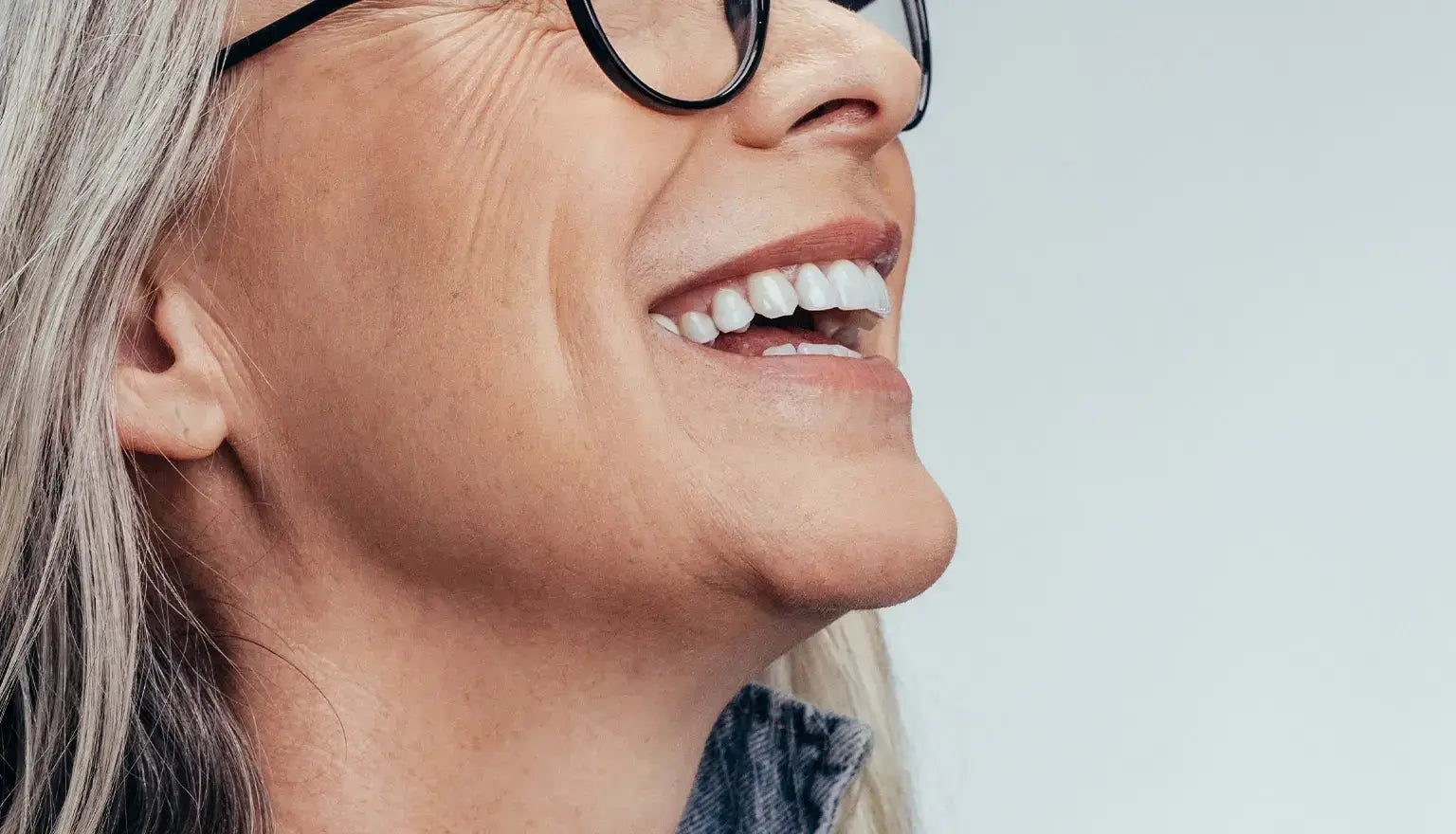
IN WITH THE BETTER
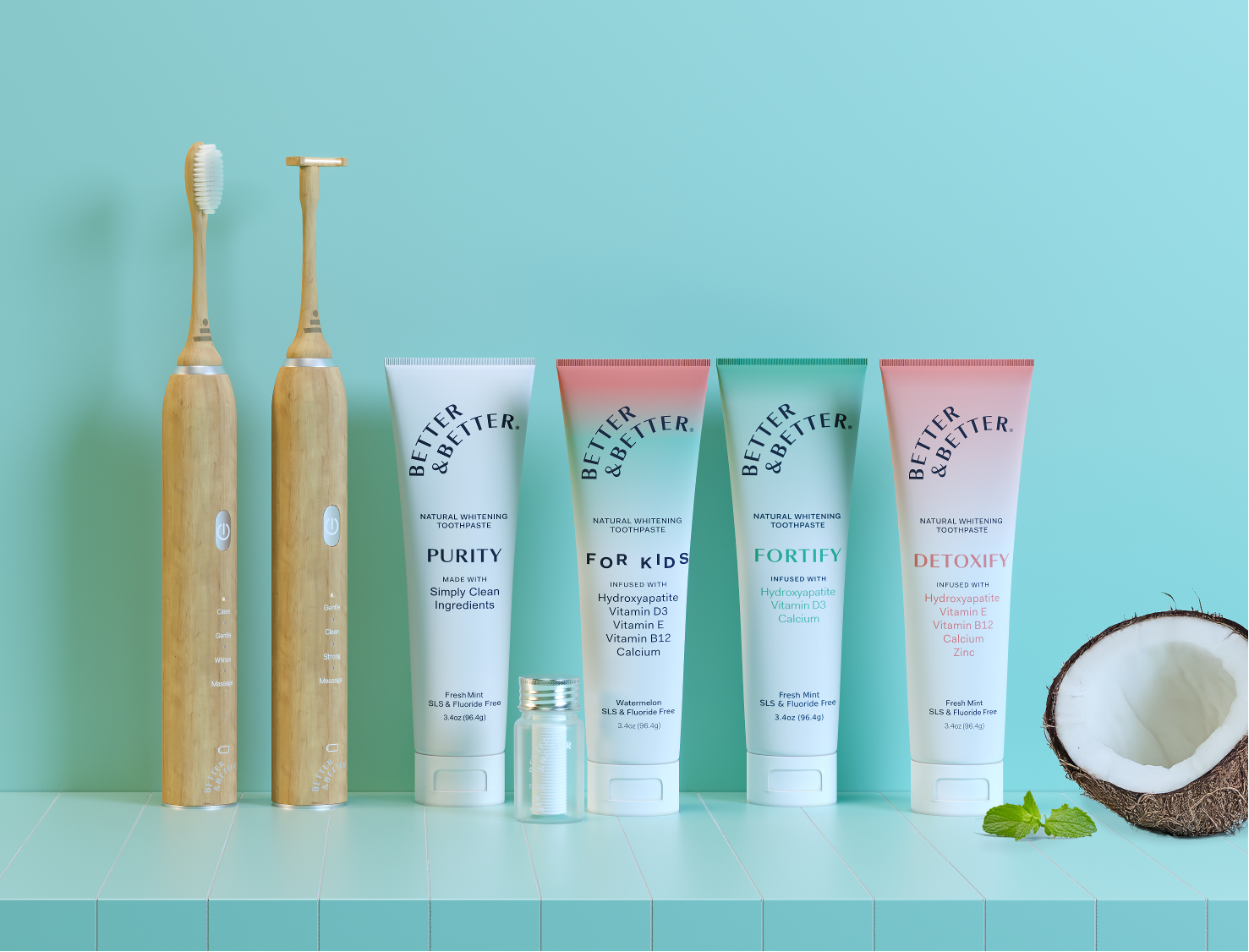
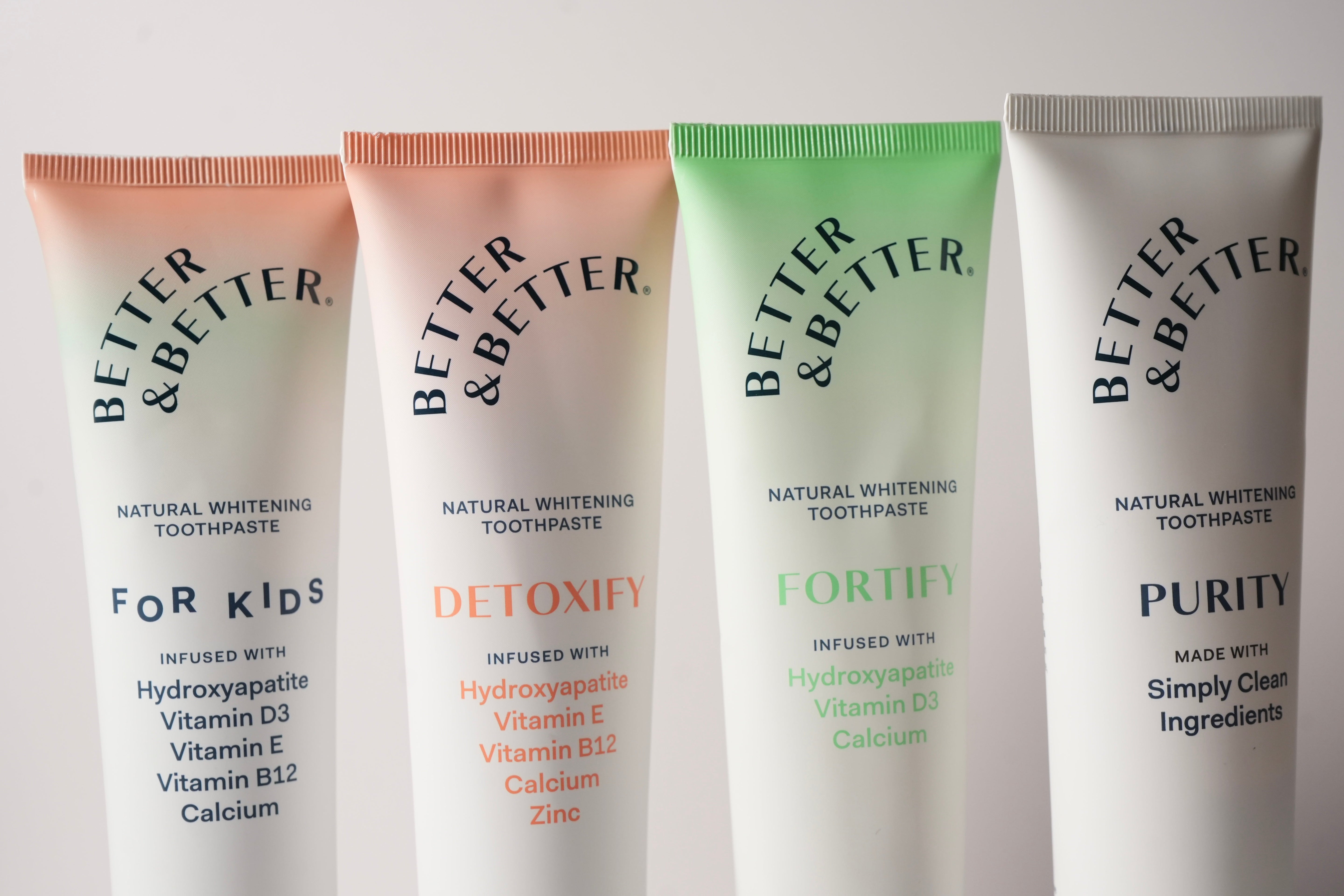
Better means simple, safe, science-backed oral health essentials that support whole-body health. Our dentist-approved formulas are 100% vegan with clean ingredients you recognize.

& BETTER FOR THE PLANET
To minimize our impact on the planet, we prioritize earth-friendly materials and natural ingredients, ensuring our products and packaging are better for the planet. We meet the strictest EWG (Environmental Working Group) standards and package in recyclable, eco-friendly materials to eliminate waste.
Even better—every subscription purchased results in a tree planted by One Tree Planted: a non-profit committed to global reforestation.
OUR RESIDENT EXPERTS
Our resident doctors, nutritionists, and scientists guide our approaches to cutting-edge research and product innovation.

Dr. Buddhadev Paul ChaudhuriyPhD, Biomedical Electrical Engineer
The CEO and Co-founder of Keylika, a startup developing metallodrugs to treat unmet medical needs. He has a PhD with a specialization in biomedical microsystems, focused on transdermal drug delivery devices.

Lisa WindfieldCertified High Performance Coach
With a background in holistic health and meditation, she also coaches with Tony Robbins and leads meditations and training for companies such as the Boston Consulting Group.

Dr. Mark NeveuPhD, Environmental Toxicology& Experimental Oncology
Dr. Neveu develops and commercializes innovative, clean label delivery systems that support a healthy microbiome. His work has resulted in well over 50 drugs, biologics, and natural health product formulations that have been commercialized for 20 years.

Dr. Jaclyn TomsicMD, DMD, FACS, Oral and maxillofacial surgeon
A board-certified Oral and maxillofacial surgeon (OMF) based out of Cleveland, OH, Dr. Tomsic is qualified oral health expert trained to treat conditions, defects, injuries, and esthetic aspects of the mouth, teeth, jaw, and face.
FOLLOW US
Let us be your guide on the way to Better & Better. We promise whimsy and wisdom



READY TO LEARN MORE?
Here’s What Happens During a Sonic Brushing Session
Most people approach brushing their teeth the same way they approach washing a dish: apply product, scrub, and rinse. The assumption here is that cleaner teeth come from bristles making contact with enamel, and that more effort equals better results. That logic holds for a manual toothbrush. It even holds for a standard electric one. But it breaks down when you introduce a sonic toothbrush. Once you understand the science, you'll never think about brushing the same way again. Here’s what happens when you switch to a sonic toothbrush. Your Mouth Becomes a Fluid Dynamic Cleaning Environment When you use a sonic toothbrush, the bristles don’t do most of the work. (Counterintuitive, we know). The Better & Better Sonic Toothbrush delivers up to 37,000 microvibrations per minute, agitating the mixture of saliva and toothpaste in your mouth. That turbulence creates a hydrodynamic cleaning action that reaches places bristles don’t physically touch: the gaps between teeth, the base of the gumline, the shallow pockets where periodontal disease begins. Think of a garden hose versus a power washer. A garden hose cleans by contact; a power washer creates enough pressure and turbulence that debris dislodges from crevices the nozzle never reaches. A standard electric toothbrush runs between 2,500 and 7,000 strokes per minute—and even then, it's spinning or pulsing its brush head to improve contact cleaning. Better than manual brushing, but still a contact sport. The fluid dynamic effect from sonic frequency produces a different category of clean entirely. Plaque Gets Disrupted Where Your Bristles Aren't The result of fluid turbulence is plaque removal in places you'd normally miss, no matter how diligent you are. The clinical evidence backs this up. A randomized controlled trial published in the Journal of Clinical Dentistry followed 66 adults with moderate periodontitis for six months, splitting them between sonic and standard electric toothbrushes. The sonic group ended the trial with significantly less interdental plaque (the kind that lives between your teeth, where bristles from any brush struggle to reach consistently). A 2017 meta-analysis of 18 separate studies landed in the same place: Sonic-powered toothbrushes decreased plaque significantly more effectively than manual toothbrushes after three months of daily use. When you use the Better & Better Sonic Toothbrush on its default Clean mode, this is exactly what's happening below the surface (or more precisely, between the teeth) during every session. Your Gumline Gets Stimulated, Not Just Cleaned Gum tissue, like any tissue, benefits from circulation. Consistent, gentle stimulation along the gumline promotes blood flow, supports tissue resilience, and helps the body resist infection. The Better & Better Sonic Toothbrush delivers that stimulation as a byproduct of normal brushing in any mode. But it also dedicates an entire cleaning mode—Massage—to this specific outcome, dialing the vibration frequency to optimize for tissue stimulation rather than plaque disruption. This isn't cosmetic. In the same Journal of Clinical Dentistry trial, the sonic group reduced gum inflammation by 31.9% over six months, compared to 18.1% in the standard electric toothbrush group. That’s nearly double the improvement with the same brushing time. Your Enamel Gets Polished at a Microscopic Level If you've used our sonic toothbrush, you’ve probably noticed that your teeth feel unusually smooth afterward—almost like a professional cleaning. That’s because of the micro-polishing effect of 37,000 microvibrations per minute working across your enamel surfaces, and it's exactly what the Whiten mode is built around. The distinction from abrasive whitening toothpastes matters here. Whitening pastes work by friction: Tiny abrasive particles physically scrape surface staining away, which can wear down enamel over time. The Whiten mode on our sonic toothbrush works differently. The fluid turbulence lifts surface staining without the abrasive friction, which is why the brush is safe for braces, fillings, crowns, veneers, and implants—surfaces that aggressive abrasive brushing can gradually compromise. For anyone with dental restorations, it’s the reason this brush works where others require caution. Your Dentist Can't Be There Every Day. Your Toothbrush Can. Optimal oral health isn’t locked behind professional treatments or twice-yearly dentist visits. It’s available every morning and every night, in two minutes, in your bathroom. Periodontal disease affects nearly half of adults over 30 in the United States, and the research is consistent that most of that damage accumulates gradually, in the interdental spaces and along the gumline that manual and standard electric brushes chronically under-clean. A sonic toothbrush can’t replace your dentist. But it can close the gap between visits in a way that no amount of careful manual brushing can. Common Questions About Sonic Toothbrushes Do sonic toothbrushes clean better than manual toothbrushes? Sonic toothbrushes help improve consistency by using rapid microvibrations to disrupt plaque more evenly across the teeth and gumline. Many people also naturally brush longer and more thoroughly with built-in timers and interval pacing. Can sonic toothbrushes damage enamel? When used properly, sonic toothbrushes are generally gentler on enamel than aggressive manual brushing. The goal is less pressure, not more. Why do my teeth feel smoother after sonic brushing? Sonic microvibrations help polish away surface buildup and plaque film, leaving the enamel surface feeling cleaner and less textured. Are sonic toothbrushes safe for braces and veneers? Yes. The Better & Better Bamboo Sonic Toothbrush is designed to safely clean around braces, crowns, veneers, fillings, and implants while maintaining gentler pressure. How hard should you press with a sonic toothbrush? Much lighter than most people think. Sonic brushes work best when you guide them slowly across the teeth instead of scrubbing aggressively.
Strong Teeth Start With Calcium. Are You Getting Enough?
Most people grow up thinking calcium is just for their bones. But your teeth need calcium just as much—and arguably more often. Unlike bones, which continuously remodel and repair themselves, tooth enamel doesn’t regenerate. Once it loses minerals, it relies entirely on what you give it day to day. And modern life isn’t exactly gentle on enamel. Coffee, citrus, sparkling water, wine, and snacks quietly chip away at your teeth’s mineral reserves. That means enamel needs consistent replenishment, not just the occasional dentist visit or a glass of milk. In this article, we’ll break down what calcium actually does for your teeth, where diet fits in, and why topical calcium can help fill the gaps. Why Your Teeth Need Calcium Tooth enamel is the hardest substance in the human body, but it isn’t indestructible. It’s made largely of calcium phosphate, a mineral structure that gives enamel its strength, density, and resistance to wear. Throughout the day, your teeth cycle through two opposing processes: Demineralization: Acids from food and drinks pull calcium and phosphate out of enamel. Remineralization: Saliva and minerals help restore some of what’s lost. This balance matters. When demineralization outpaces remineralization, enamel weakens. Everyday acids—coffee, citrus, soda—lower the pH in your mouth. When pH drops, calcium leaves the enamel surface. You don’t feel it happening, but over time, those tiny losses add up. And while brushing removes plaque and bacteria, brushing alone doesn’t rebuild minerals. Without calcium present, you’re cleaning the surface—but not restoring what erosion takes away. What Happens When Teeth Don’t Get Enough Calcium? Enamel loss is sneaky. It doesn’t announce itself with pain or drama. It shows up slowly, often years after the damage begins. Some common signs include: Increased sensitivity, especially to cold or sweet foods Weaker enamel, which raises the risk of cavities Dull or yellowed teeth, as thinner enamel reveals dentin underneath Greater susceptibility to erosion from acids and grinding The key thing to know is that enamel loss is cumulative. Small daily losses compound over time, which is why prevention and maintenance matter far more than last-minute fixes. Dietary Sources of Calcium Calcium-rich foods support your entire body—including your teeth. Here are some common sources: Dairy: milk, yogurt, cheese Leafy greens: kale, collards, bok choy Fortified foods: plant-based milks, cereals Nuts and seeds: almonds, sesame, chia But diet has limitations when it comes to enamel. Calcium from food is absorbed into the bloodstream and prioritized for essential systems like bones, muscles, and nerve signaling. Meanwhile, acids in your mouth continue to pull minerals directly from the tooth surface. That means even a calcium-rich diet doesn’t fully protect enamel from local mineral loss. Diet is necessary—but not always sufficient on its own. Why Calcium for Teeth Is Different from Calcium for Bones Bones are living tissue. They break down and rebuild constantly. Teeth are different. Once enamel forms, it doesn’t regenerate. Teeth rely on surface-level mineral support to stay strong. That’s why topical delivery—calcium applied directly to teeth—matters. Think of it this way: Dietary calcium supports your body systemically. Topical calcium supports enamel where damage actually happens. Calcium-Infused Toothpaste: A Smarter Way to Supplement Calcium-infused toothpaste isn’t meant to replace a healthy diet. It’s a supplemental strategy that works locally, consistently, and without adding friction to your routine. When calcium is present during brushing, it helps support remineralization at the tooth surface, reinforcing enamel right where acids do their damage. And because brushing is already a twice-daily habit, it’s one of the easiest ways to deliver consistent mineral support. At Better & Better, we have three calcium-infused formulas designed to strengthen enamel in different ways, depending on what your mouth needs. Fortify Fortify is built for enamel strength and sensitivity support. It combines hydroxyapatite, vitamin D3, and calcium to help rebuild enamel and reinforce tooth structure—no fluoride needed. 64 mg of calcium per brush Hydroxyapatite strengthens enamel and supports remineralization Fluoride-free, with no compromises on protection Detoxify Think of Detoxify as a deep clean for your mouth. Along with a microdose of calcium, it includes a unique blend of bacteria-fighting micronutrients. Vitamin B12, vitamin E, and zinc help fight plaque and odor-causing bacteria Hydroxyapatite restores enamel and strengthens teeth Supports a healthier oral microbiome—all without fluoride Kids Multivitamin Toothpaste Growing teeth need minerals too. This fluoride-free kids’ toothpaste supports developing enamel and healthy gums while making brushing something kids actually enjoy. Infused with hydroxyapatite and calcium to fight cavities Kid-friendly doses of vitamins D3, B12, and E Naturally sweetened with organic xylitol and watermelon A Simple Protocol to Support Your Enamel Enamel strength isn’t a one-time achievement. It’s a daily habit. Here’s a simple approach: Brush twice daily with a calcium-infused toothpaste Avoid brushing immediately after acidic foods or drinks Stay hydrated to support saliva production Limit frequent acid exposure when possible Keep up with regular dental checkups Strong teeth don’t come from shortcuts. They come from showing up twice a day (and giving enamel what it needs to stay intact).
Zinc Is the Quiet Hero of Your Immune System. Here's an Easy Way to Get More of It.
Cold and flu season has a way of sneaking up on you. One week you’re still pretending summer iced coffee makes sense, the next you’re washing your hands like a surgeon and side-eyeing anyone who clears their throat in public. It’s the season of immune system optimization. Elderberry gummies. Vitamin C packets. That one friend who swears by cold plunges. But beneath all the wellness noise, the foundation of a healthy immune system is still refreshingly boring: good nutrition, consistent habits, and making sure your body has the nutrients it needs to do its job. One of the most overlooked? Zinc. Zinc doesn’t get the same spotlight as vitamin C or D, but it plays a surprisingly central role in immune function, tissue repair, and cellular communication. If you’ve ever wondered why zinc lozenges pop up every winter, or whether you’re getting enough of it day to day, this is your crash course. 3 Ways Zinc Supports Your Immune System Here are three ways zinc helps your immune system stay sharp, balanced, and resilient. 1. Cell Development & Defense Zinc is essential for the development and function of T-cells in the thymus, as well as natural killer (NK) cells and macrophages, which act as your body’s first line of defense. These cells identify and eliminate pathogens before they can gain momentum. Research also suggests that when zinc supplements are taken within 24 hours of the first cold symptoms, zinc may help shorten the duration of a cold. Signaling & Regulation Your immune system runs on chemical signals. Zinc helps regulate immune cell signaling and cytokine production, making sure responses are strong enough to be effective, but not so aggressive that they cause excessive inflammation or tissue damage. Think of zinc as part thermostat, part traffic controller. Barrier Function Zinc also supports the integrity of your skin and mucosal barriers—your body’s physical front lines against bacteria and viruses. It plays a role in DNA and protein synthesis, which immune cells rely on to replicate and repair themselves efficiently. When zinc levels dip, those protective systems can weaken. How Much Zinc Do You Need Per Day? According to the Mayo Clinic, adult women age 19 and older who are not pregnant should get 8 milligrams (mg) of zinc per day, while adult men age 19 and older should get 11 mg per day. Needs vary for children and for people who are pregnant or breastfeeding, so it’s always smart to talk with a healthcare professional if you have specific questions. The challenge isn’t knowing the number—it’s consistently hitting it without turning your life into a supplement schedule. 6 Signs You Might Be Low on Zinc Zinc deficiency can be subtle, especially in early stages. Some common signals include: Getting sick more often or taking longer to recover Slow wound healing Changes in taste or smell Dry or irritated skin Frequent mouth issues like inflammation or sensitivity Low appetite or unexplained fatigue None of these automatically mean you’re zinc deficient, but they can be clues worth paying attention to. How to Get More Zinc in Your Diet Food sources are the gold standard. Zinc is naturally found in: Shellfish (especially oysters) Red meat and poultry Pumpkin seeds and nuts Beans and lentils Whole grains and dairy products Supplements are another option, especially for people with dietary restrictions or absorption challenges. The downside? It’s one more pill to remember, and zinc supplements can sometimes cause stomach irritation when taken on an empty stomach. Which brings us to a simpler idea. Skip a Step: Boost Zinc When You Brush Your Teeth Your daily zinc intake doesn’t have to require another bottle on your counter or reminder on your phone? Better & Better’s Detoxify Zinc Toothpaste delivers 3.6 mg of zinc per brush, baked directly into a habit you already do twice a day. It also includes microdoses of vitamin E and vitamin B12, supporting gum health, tissue repair, and overall oral wellness. Instead of treating zinc like a once-a-day supplement you might forget, Detoxify turns it into a built-in ritual. Brush your teeth. Support your immune system. No extra steps required. Beyond micronutrients, Detoxify helps support a balanced oral microbiome for fresher breath and healthier gums, while being powered by hydroxyapatite and calcium to naturally remineralize enamel and strengthen teeth—all without fluoride. It’s oral care that quietly works harder in the background.
Bleeding Gums When You Floss? Here’s What It Might Mean
There’s a specific kind of panic that hits the moment you floss, spit, and see pink in the sink. Even if you’re a fully functioning adult, bleeding gums still make you wonder: Is something actually wrong? Bleeding gums during flossing is very common, but not ideal—and definitely not a sign to stop flossing altogether. Most of the time, it’s your gums waving a tiny red flag: “Hey, we need some attention.” Think of this guide as your myth-busting walkthrough of what’s normal, what’s not, how to soothe the irritation, and when to bring in a professional. Plus, we’ll talk about why a smarter tool—like the Better & Better Bamboo Sonic Flosser—can make all the difference. Is It Normal for Gums to Bleed When You Floss? Short answer: It’s common, but not ideal. Bleeding usually means your gums are inflamed, and inflamed gums (AKA gingivitis) are incredibly easy to irritate. The most frequent cause? Plaque buildup from inconsistent flossing. But hormones, dehydration, mouth breathing, medications, and nutrient deficiencies can all make the gums more reactive as well. The key thing to know: bleeding is a signal, not a stop sign. Most people see bleeding when they’re just getting back into flossing, but when they stay consistent, it often improves within days. 5 Reasons Your Gums Bleed When You Floss Here are some of the most common culprits. 1. Inflammation From Plaque Buildup Plaque is basically a sticky bacteria blanket that loves to irritate your gumline. Once it builds up, the tissue becomes swollen and delicate—meaning the slightest pressure leads to bleeding. Important PSA: plaque starts turning into tartar in 24 hours, which is why skipping flossing “just for a bit” can spiral fast. 2. Flossing Technique Problems If you “snap” floss straight down between teeth, it’s like using a tiny whip on your gums. The gentle glide-and-hug technique is what dentists recommend, but most people either floss too forcefully or not deeply enough. Technique matters more than pressure. 3. The “Too Much, Too Soon” Effect If you only floss before a dentist appointment, your gums will almost definitely bleed once you restart. That irritation usually calms down within a week or two of consistent flossing. 4. Underlying Health Conditions Pregnancy hormones, diabetes, blood thinners, or vitamin deficiencies (especially C) can all make gums more reactive. In these cases, gentle daily care is even more important. 5. Mouthwash or Microbiome Imbalances Overusing strong antiseptic rinses can irritate gum tissue and disrupt the oral microbiome, leaving gums red, reactive, and quick to bleed. How to Soothe Your Gums Right Now If your gums are feeling sensitive or swollen, think of this as the oral-care equivalent of a calming skincare routine: Warm salt water rinse to reduce inflammation. Soft-bristled toothbrush only (medium and hard bristles are basically sandpaper) Skip harsh mouthwashes for a few days. Hydrate, because dry mouth = angry gums. Choose anti-inflammatory ingredients, like vitamin E (which is in our Detoxify Toothpaste). These small tweaks help tissues recover. How to Prevent Bleeding Gums Long-Term This is where healthy habits (and the right tools) make all the difference. 1. Floss Consistently, Not Sporadically The oral microbiome rebuilds daily, which means “sometimes” flossing can make gums even more reactive. Consistency is what retrains gum tissue to stay strong and flexible. Daily is ideal; every other day is the bare minimum. 2. Improve Your Technique, Or Let Tech Do It For You Most bleeding comes from how people floss, not the fact that they floss. That’s where our Bamboo Sonic Flosser becomes a game-changer: Up to 14,000 sonic vibrations per minute sweep away plaque 5× faster than manual flossing. Slim bamboo heads + plant-based floss glide gently—no snapping, no yanking, no accidental gum trauma. Four modes (gentle, clean, strong, massage) let you tailor the experience to sensitive gums. The ergonomic handle makes reaching back molars shockingly easy—usually the first place bleeding shows up. For anyone whose gums bleed easily, or for people trying to build consistency without discomfort, this is the tool that makes flossing finally feel doable. 3. Brush Before Bed Like It Actually Matters Nighttime brushing is the real MVP. Going to sleep with plaque is like letting bacteria hold an 8-hour sleepover on your gums. Not ideal. 4. Stay Ahead of Inflammation Hydrate, get enough vitamin C, manage stress, and avoid smoking/vaping when possible. Your gums are tiny but dramatic—they react quickly to lifestyle shifts. When Should You See a Dentist? Here’s when bleeding needs a professional eye: It lasts more than 7–10 days, even with consistent flossing. Gums look puffy, shiny, or tender. You notice persistent bad breath. There’s gum recession or loose teeth. Bleeding feels “out of proportion” to how gently you’re flossing. Pregnant? Monitor bleeding closely—pregnancy gingivitis is very real. Bleeding Isn’t a Stop Sign; It’s a Signal Flossing shouldn’t hurt, and bleeding isn’t something to ignore. But it’s also not a reason to panic. With a little consistency, a gentler approach, and tools that support your mouth instead of irritating it, gums bounce back surprisingly fast. If you’ve been avoiding flossing because of bleeding, consider making the switch to a smarter (and kinder) flossing routine—especially with a tool designed for sensitive gums.
What Morning Breath Reveals About Your Body
Every morning, millions of people wake up in the same small panic: a sudden awareness of their own mouth. There’s the tongue film. The stale, slightly metallic taste. The impulse to mumble “don’t come too close” before coffee. Morning breath is one of those mundane realities that still feels faintly shameful. But what is it, really? Why does it happen to everyone, and what separates it from regular bad breath—the kind that a mint might mask but not cure? Ahead, we’ll explore what this small, embarrassing phenomenon says about how our bodies function when we’re asleep. What Is Morning Breath? Morning breath (scientifically, “morning halitosis”) is the combined result of reduced saliva flow, anaerobic bacterial activity, and overnight metabolism. During the day, your mouth is constantly flushed with saliva. It’s your body’s built-in cleaning system, diluting acids, washing away food debris, and keeping oral bacteria in check. But when you sleep, saliva production drops by up to 90%. Your mouth essentially turns into a low-oxygen microclimate—perfect for anaerobic bacteria (the kind that thrive without air) to start feasting. Those bacteria metabolize proteins in leftover food particles and dead cells, producing volatile sulfur compounds—hydrogen sulfide, methyl mercaptan, and dimethyl sulfide—the biochemical villains behind that unmistakable morning funk. So while daytime bad breath can stem from onions, coffee, or poor brushing, morning breath is biological inevitability. Even people with flawless hygiene wake up with it, though its severity can hint at deeper issues. What Makes Morning Breath Worse Not all morning breath is created equal. A few key factors can amplify it: Mouth Breathing or Snoring: When you sleep with your mouth open, it dries out tissues faster, letting sulfur compounds accumulate. High-Protein Diets: Protein breakdown produces amino acids that bacteria easily convert to odor-causing gases. Alcohol and Smoking: Both dehydrate the mouth and disrupt the microbiome. Gum Disease or Cavities: Bacteria love to colonize damaged or inflamed tissue. Skipping Nighttime Brushing: The obvious one. Neglecting plaque removal gives bacteria a midnight buffet. The Protocol to Prevent Morning Breath Morning breath may be universal, but it’s not inevitable. A few habit tweaks can dramatically improve how your mouth feels (and smells) at sunrise. 1. Brush Before Breakfast Brushing before eating removes overnight plaque and coats teeth in fluoride or remineralizing agents, making enamel more resistant to acidic foods like coffee or fruit juice. Brushing after breakfast, on the other hand, can actually scrub acids deeper into enamel. 2. Floss Before Bed Flossing doesn’t just remove trapped food; it disrupts biofilm, the sticky bacterial matrix that shelters odor-causing microbes. Think of it as exfoliating your mouth. If you’re still using traditional string floss, consider switching to a sonic flosser. It uses microvibrations to dislodge plaque and debris (without having to get your fingers dirty). 3. Hydrate, Then Breathe Through Your Nose Dehydration is the unsung driver of bad breath. A few sips of water before bed—and training yourself to keep your mouth closed while sleeping—can keep saliva production steadier overnight. 4. Skip the Mouthwash Antiseptic mouthwashes with high alcohol content can kill beneficial bacteria along with the bad. Look for formulas with zinc ions or mild antimicrobials that neutralize sulfur compounds without stripping your microbiome. 5. Use a Bacteria-Fighting Toothpaste Better breath isn’t about masking smells with artificial fragrances; it’s about tackling odor-causing bacteria at the source. That’s where our Detoxify toothpaste comes in. Formulated with vitamin B12, vitamin E, and zinc, Detoxify targets the root causes of morning breath while promoting gum health and enamel strength. Its hydroxyapatite (a mineral form of calcium found naturally in teeth) helps restore and strengthen enamel, offering protection without relying on fluoride. Think of it as brushing 2.0: You’re not just cleaning your teeth; you’re re-engineering your mouth’s environment so it doesn’t produce that telltale morning odor in the first place. It’s Not You, It’s Biology It’s easy to dismiss morning breath as a minor inconvenience. But it’s also a fascinating window into how small microbial shifts mirror larger cultural ones. The same science that helps us understand biofilms and volatile sulfur compounds is helping reframe oral care as part of overall wellness, not vanity. In other words, your mouth is a diagnostic dashboard. When it’s out of balance, the rest of your body usually follows.
Is Flossing the Secret to Clearer Skin?
You floss to clear out plaque and erase the evidence of the kale salad you had for lunch. But flossing doesn’t just clear out the nooks and crannies in your mouth—it can help clear up your skin too. Our mouths are like a window into the rest of the body. The health of your gums and teeth doesn’t stop at your smile; it ripples outward, influencing everything from cardiovascular wellness to—you guessed it—your complexion. Good oral care habits aren’t just about avoiding cavities or keeping your dentist happy. They may play a role in reducing inflammation that contributes to breakouts. Ahead, we’ll break down the fascinating science linking oral health to skin health, show you how daily flossing might help keep acne at bay, and introduce a new way to make this ritual faster, easier, and a whole lot better for the planet. The Link Between Oral Health and Skin Health Your mouth isn’t just teeth and gums—it’s home to a full-blown microbiome: billions of microorganisms working together (or sometimes against each other). When this microbiome is balanced, it protects you. When it’s not, inflammation kicks in, and that inflammation doesn’t always stay local. Recent research has begun connecting the dots between oral health and skin health. One study published in the Journal of Clinical and Aesthetic Dermatology suggests a possible link between periodontal bacteria and acne lesions. The reasoning is simple: when oral bacteria run unchecked, they can trigger inflammatory responses in the body. That inflammation can then show up elsewhere, like in the form of breakouts on your skin. While the science is still emerging, more and more evidence points to the fact that your gums and your skin are part of the same larger story. Neglect one, and you might see the consequences in the other. How Flossing Can Keep Your Skin Clear At its most basic, flossing is about cleaning where your toothbrush can’t reach. But on a bigger scale, it’s about reducing the bacteria and inflammation that thrive in those tiny hidden spaces. Skip flossing, and bacteria builds up, gums get irritated, and low-grade inflammation sets in. Skin conditions like acne are also closely tied to inflammation. So by reducing gum inflammation through daily flossing, you may also be cutting down on the systemic inflammation that can aggravate breakouts. Think of flossing as the foundation of your health routine. Just like moisturizer locks in hydration for your skin, flossing keeps bacteria in check for your mouth. The result? Not just healthier gums, but potentially healthier skin too. Flossing: The Skincare Step You Didn’t See Coming When we think about skincare, we usually picture serums, cleansers, or the latest TikTok mask. But the truth is, a glowing complexion starts earlier in the routine—sometimes as early as flossing. That’s why we reimagined this often-skipped step with our Bamboo Sonic Flosser: the world’s first biodegradable sonic flosser. We wanted to take everything good about flossing (plaque removal, gum health, inflammation reduction) and make it faster, smarter, and easier to stick with—while cutting down on the plastic waste that comes with traditional flossers. Here’s why it belongs in both your oral care and your skincare routine: Plastic-free where it counts: Biodegradable bamboo heads and castor bean oil floss.Five times faster than traditional flossing: Because the best routine is the one you’ll actually keep. 14,000 sonic vibrations per minute: A deep yet gentle clean that sweeps away plaque comfortably. It’s everything you want from flossing—effective, sustainable, and seamlessly built into your routine.
Meet the World’s First Bamboo Sonic Flosser
We built Better & Better to rethink the everyday rituals most of us take for granted. From vitamin-infused toothpaste to biodegradable toothbrushes, we’ve reimagined the small daily habits that add up to a lifetime of impact. Now, it’s flossing’s turn. Today, we unveiled our Bamboo Sonic Flosser: the world’s first biodegradable electric flosser. It sweeps away plaque at sonic speed, minus the plastic waste that usually comes with it. After plenty of testing (and more than a few floss sessions ourselves), we’re thrilled to share how it works, why it matters, and why it just might become your favorite part of your routine. Meet the Bamboo Sonic Flosser Many electric flossers do a decent job, but they rely on plastic heads that pile up in landfills. We knew there had to be a better way. We reimagined our Bamboo Sonic Flosser from the ground up, fusing efficiency and sustainability in one smart design: Biodegradable bamboo heads paired with castor bean oil floss—plastic-free where it counts 14,000 vibrations per minute to sweep away plaque quickly and comfortably Four cleaning modes (Gentle, Clean, Strong, Massage) so you can choose your perfect pressure It’s waterproof, just in case you’re the kind of person who likes flossing in the shower Ergonomic handle that makes reaching back molars easy, designed for ages 8+ The result? An electric flosser that’s as kind to your mouth as it is to the planet. 4 Benefits of the Bamboo Sonic Flosser On the fence about this flosser? Here are four reasons it deserves a spot on your counter. 1. Sustainability Every bamboo head is biodegradable, and the floss itself is made from castor bean oil. Less waste, more peace of mind. 2. Efficiency With 14,000 sonic vibrations per minute, it’s up to five times faster than traditional flossing. That’s a deep clean in a fraction of the time. 3. Comfort Slim bamboo heads and gentle sonic motion help the floss glide smoothly between even the tightest spaces—no tugging, no forcing. 4. Customization Not every mouth is the same, and neither is every flossing session. That’s why our Bamboo Sonic Flosser comes with four modes: Gentle: soft and easy on sensitive gums Clean: your everyday setting for a thorough sweep Strong: a deeper, more powerful clean Massage: a pulsing pattern that stimulates gums and boosts circulation How to Use the Bamboo Sonic Flosser If you can press a button, you can master the Bamboo Sonic Flosser. Here’s the quick guide. Charge it up. Place the handle on the charging holder and power it fully before your first use. One charge = up to two months of flossing. Snap on a bamboo head. Slide the rod onto the handle, click a bamboo head into place, and you’re ready. Choose your mode. Gentle, Clean, Strong, or Massage—pick the one that feels best for you. Floss smarter. Guide the floss between your teeth, forming a gentle “C” shape around each tooth. Let the vibrations do the work while you sweep along the gumline. Refresh and repeat. Swap in a fresh bamboo head when you’re ready, and compost or recycle where facilities exist. A Small Part of a Big Difference Sure, our Bamboo Sonic Flosser is an exciting new gadget to have on your bathroom counter. But it’s also part of a bigger shift toward sustainable, high-performance oral care. Pair it with our Bamboo Sonic Toothbrush and you’ve got a complete eco-friendly upgrade that would make your dentist proud. Ready to make flossing faster, easier, and lighter on the planet? Check it out today.
Back-to-School Oral Care: 5 Tips from Dr. Jacci
Back to school means back to basics: reading, writing, arithmetic, and…oral care! It’s the perfect time to get kids back into the swing of things, including their oral care routine. You may have heard the saying, the mouth is the gateway to the body. Food digestion starts in our mouths; the air we breathe passes through our oral cavity and airway. Therefore, it’s not hard to see why oral health matters—especially for young mouths. Healthy mouths and teeth lead to more attentive kiddos with increased energy, confidence, better performance in school, and fewer sick days. But how can we get them excited about their daily brushing? Keep reading for some simple tips and kid-approved products that make brushing easy, fun, and something your child will actually look forward to doing. 1. Make Brushing Fun & Easy As any parent knows, the hardest part of parenting is often just keeping your child’s attention long enough to get any job accomplished. Kids get bored easily, especially with brushing. So what better way to keep them engaged than with a kid’s toothpaste that actually tastes like something they already like? Better & Better’s Kids Toothpaste has a natural watermelon flavor that is sure to please even the pickiest of palates. It’s fluoride-free and packed with nutrients for healthy gums and whole-body wellness. 2. Commemorate the New School Year With a New Toothbrush It is important to remember that toothbrushes are not one size fits all. Children with little fingers and hands need little toothbrushes to get the job done effectively. No matter their age, softer is always better for their teeth and gums. Better & Better has you covered here as well, with a kids' natural bamboo toothbrush with soft bristles, sized perfectly to fit into small hands and even replaceable heads to extend the life of the brush and the environment. 3. Make Flossing a Team Activity Before bedtime, don’t forget to have your kids floss too! Many parents overlook flossing themselves, so flossing with your kids is another way to improve the oral health of the entire family. Better & Better’s kid-friendly floss picks make it easy for kids to get the hang of flossing, which can take some dexterity at first. Bonus: They’re biodegradable! 4. Create a Back-to-School Brushing Routine One way to get kiddos excited about brushing is to make it fun. Emphasize brushing as just another part of the daily routine. Daily charts that track brushing with stickers and prizes for perfect attendance are easy ways to get kids engaged and teach them valuable life skills such as accountability and responsibility. Another idea is to make toothbrushing a dance party; have your child pick a few of their favorite songs; the first song is the brushing song, so they'll brush for the duration of the song (most songs are on average 2-3 minutes, which is the same amount of time we should be brushing). Then the second song is dance party time! Added bonus: they will tire themselves out just in time for bed. Looking for a place to start? Look no further than the Better & Better Kids Starter Set that has everything kids need for an easy, eco-friendly routine. 5. Pack a Toothbrush for On-the-Go Between after-school activities, sports practice, and the occasional sleepover, kids spend a lot of time away from home. Packing a travel-friendly toothbrush in their backpack makes it easy to sneak in a quick brush after lunch or before heading to a friend’s house. Better & Better’s kids’ bamboo toothbrush is light, compact, and perfect for travel, especially when paired with a mini tube of our natural watermelon toothpaste. It’s a small habit that keeps their smile fresh and their confidence high, no matter where the school day takes them.